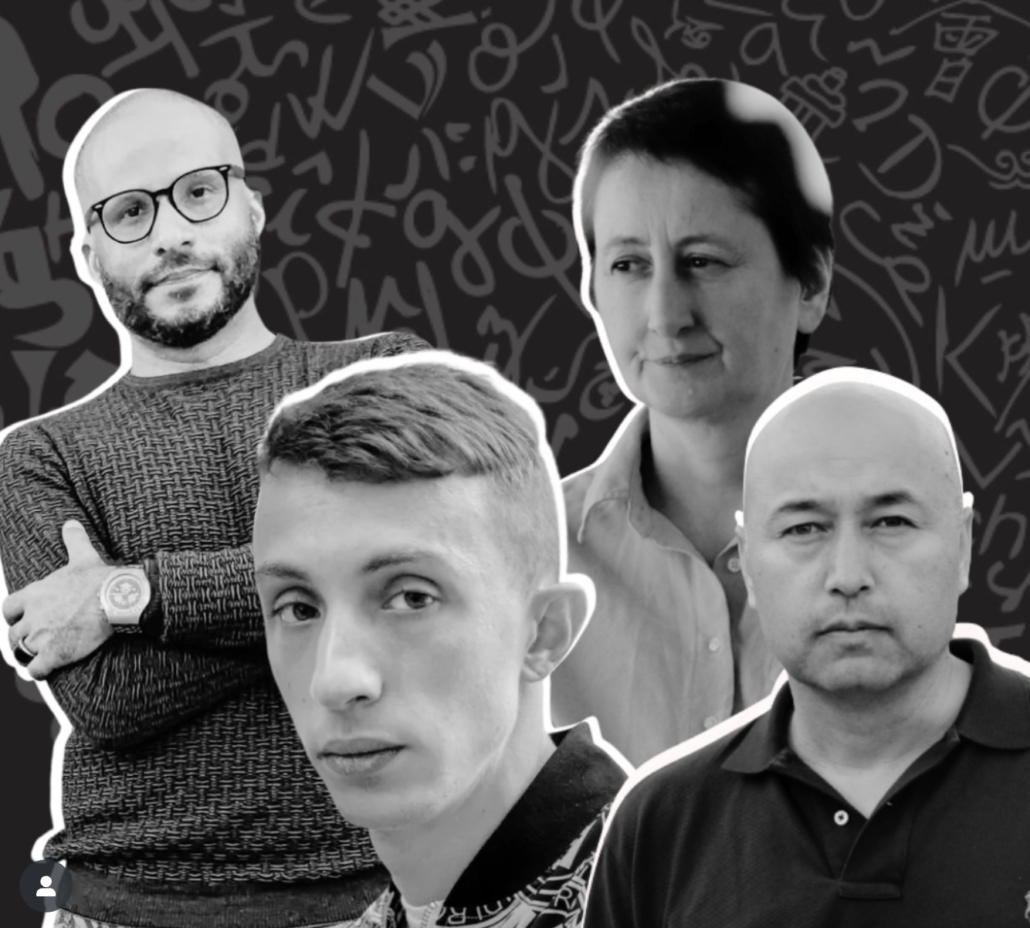
Free Rory, Mohamed, Mzia and Yalqun!
PEN International’s annual Imprisoned writers campaign 2025 highlights the situation of freedom of expression in Georgia, Algeria, Venezuela, and China. Read our appeal, learn about the four focus prisoners, and see how you can participate in the fight for their cause.
READ MORE ABOUT HOW PEN NORWAY MARKS THIS YEAR’S CAMPAIGN
The Day of the Imprisoned Writer, November 15, was established in 1981 by PEN International‘s Writers in Prison Committee. It is a global day of solidarity with writers who resist the oppression of the fundamental human right to free expression.
Each year, PEN International selects a group of imprisoned writers from various parts of the world—authors, poets, journalists, and activists who have been labeled as dangerous by those in power. This year, the day and the campaign, which lasts until Human Rights Day on December 10, focuses on Mzia Amaglobeli from Georgia, Mohamed Tadjadit from Algeria, Rory Branker from Venezuela, and Yalkun Rozi from China. We also take the opportunity to highlight the situation of freedom of expression in these countries.
Rory Branker, journalist and editor (Venezuela)
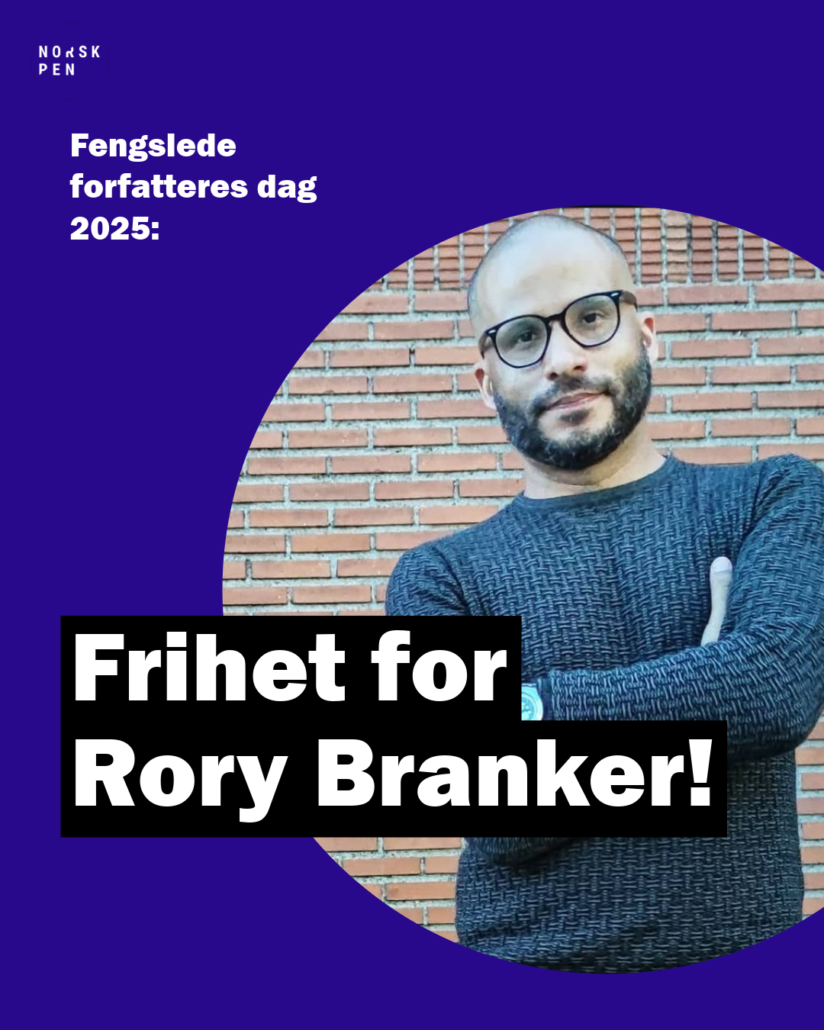
Name: Rory Daniel Branker
Occupation: Journalist, Editor, Columnist
Situation: Arbitrary Detention
#RoryBranker #DayoftheImprisonedWriter
Venezuelan journalist Rory Branker is being held in arbitrary detention in Caracas, after having been forcibly disappeared for more than 200 days. He has been denied judicial guarantees and access to independent legal counsel. PEN International calls for his immediate and unconditional release, and for his physical and psychological integrity to be safeguarded.
Mohamed Tadjadit, poet, activist (Algeria)
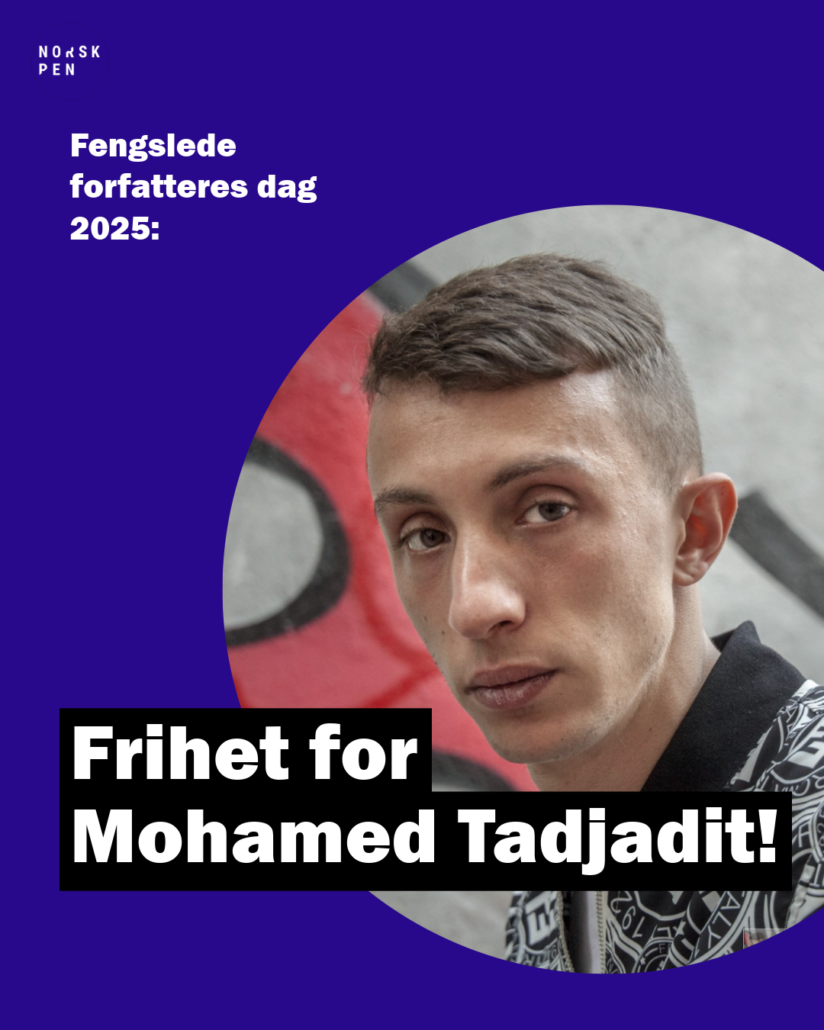 Name: Mohamed Tadjadit
Occupation: Poet, activist
Situation: Imprisoned
#MohamedTadjadit #DayoftheImprisonedWriter
Algerian poet and activist Mohamed Tadjadit, known as “the poet of the Hirak”, was sentenced on 11 November 2025 to five years in prison, on top of the one-year sentence he was already serving, on baseless terrorism-related charges linked to his expression and peaceful activism. He also continues to face prosecution in another case for his online posts. A leading voice of Algeria’s 2019 pro-democracy Hirak movement, he has endured years of harassment, arbitrary arrests, and imprisonment for his poetry and activism. PEN International calls on the Algerian authorities to immediately and unconditionally release Mohamed Tadjadit and drop all charges against him.
Mzia Amaglobeli, journalist (Georgia)
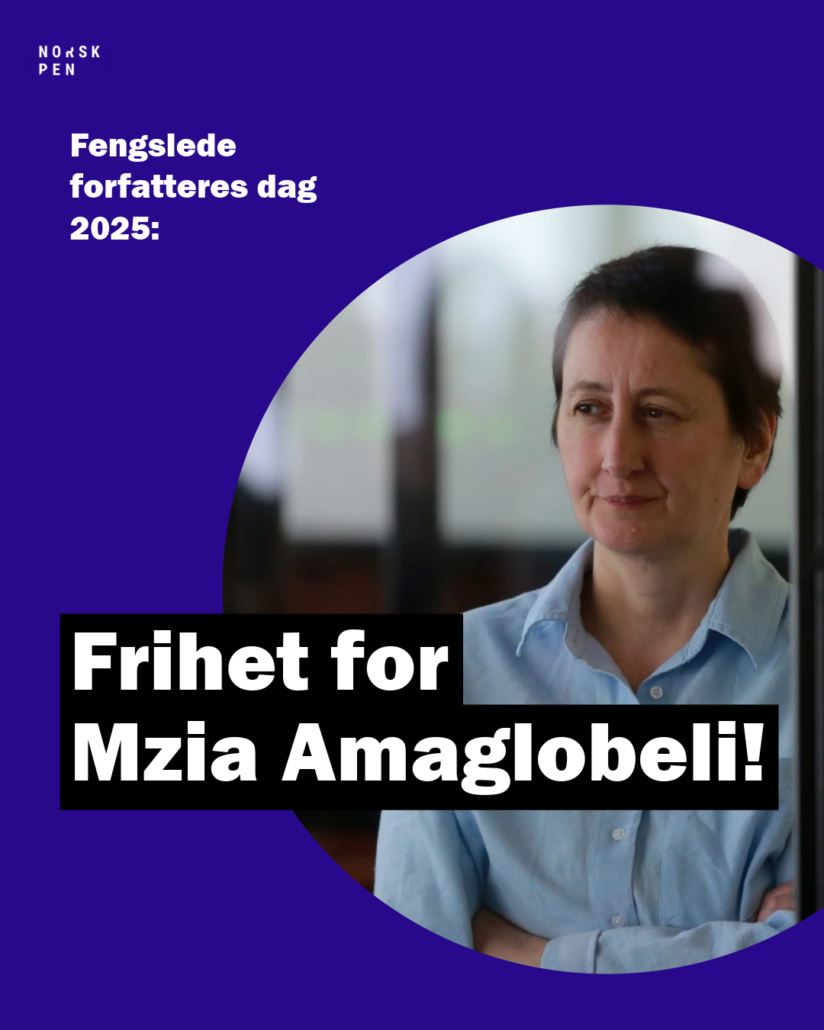
Name: Mzia Amaglobeli
Occupation: Journalist
Situation: Imprisoned
#MziaAmaglobeli #DayoftheImprisonedWriter
Journalist Mzia Amaglobeli is serving a two-year prison sentence in Georgia on politically motivated grounds. She must be immediately released, her right to a fair trial upheld, and her allegations of ill-treatment by police promptly and thoroughly investigated.
Yalkun Rozi, writer and literature critic (China)
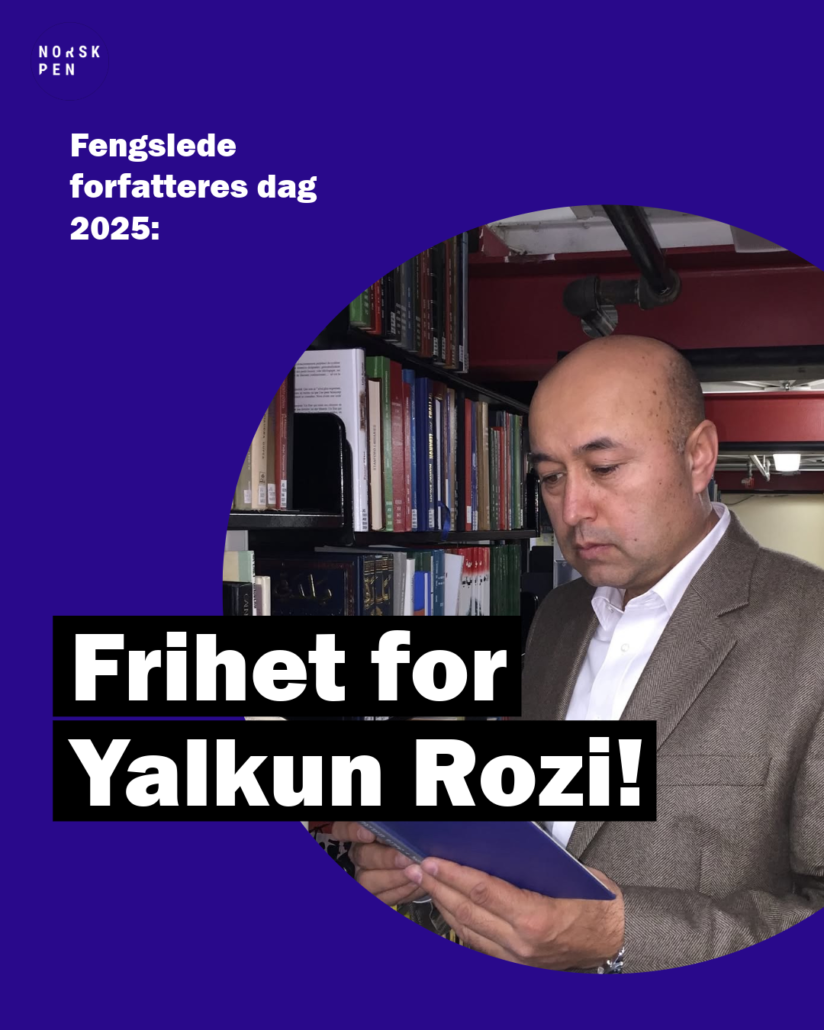
Name: Yalqun Rozi
Occupation: Writer, Journalist, Editor, Publisher, Literary Critic
Situation: Imprisoned
#YalqunRozi #DayoftheImprisonedWriter
Uyghur writer and literary critic Yalqun Rozi is serving a 15-year prison sentence in Xinjiang, China, for “inciting subversion of state power.” Arrested in 2016, he had long promoted Uyghur language and culture through literature and education. PEN International calls on the Chinese authorities to release Yalqun Rozi immediately and unconditionally, and to end its practice of systematic cultural erasure in Xinjiang.
– Where oppression grows, resistance grows as well.
(Excerpt from a speech at Norwegian PEN’s Day of the Imprisoned Writer event on November 13 at Sentralen in Oslo)
“We begin with the big picture and with the countries from which these brave voices come. Looking at the big picture, we see a world moving in the wrong direction.
Across large parts of the globe, control is tightening, and voices that should be heard are being silenced. Laws are being rewritten to make criticism illegal. Journalists are imprisoned for telling the truth. Protesters face violence. What was once promises of democracy are increasingly used to covering up abuse of power. In country after country, new forms of censorship are being constructed—some overt, others disguised as security, tradition, or patriotism.
“Laws are being rewritten to make criticism illegal. Journalists are imprisoned for telling the truth. Protesters face violence.
From North Africa to South America, from the Caucasus to China, we see how the space for free expression is shrinking. And with that, the opportunity to resolve conflicts with words, not weapons, also disappears.
Algeria
In 2024, Algerian authorities continued to crack down on critical voices and close the civil space by limiting freedom of expression, press freedom, and the right to organize, assemble, and move freely. President Abdelmadjid Tebboune was re-elected for a new term in September, in a climate marked by censorship, media control, and a lack of real political debate. Activists, journalists, and lawyers were charged and imprisoned for peaceful expressions. The authorities tightened legal frameworks and employed vaguely formulated provisions—including anti-terrorism clauses—to punish independent and critical voices. Algerian society is increasingly caught between silence and punishment.
Georgia
In 2024, Georgia took significant steps backward for human rights, with new laws undermining freedom of expression and the right to organize. In June, Parliament passed a law requiring certain media and organizations to register as “agents of foreign influences.” The government claimed the purpose was to promote transparency, but both the rhetoric and timing indicated that the law was primarily meant to stigmatize and weaken independent voices. Later that year, a law on “family values and child protection” was passed, introducing discriminatory restrictions on the rights of LGBTQ+ individuals to speak out, assemble, and participate in public life. When the government postponed EU negotiations, it led to large protests across the country. Police used tear gas, water cannons, and rubber bullets against predominantly peaceful protesters, and hundreds were arrested. Journalists were beaten, chased, and imprisoned.
Venezuela
From being a relatively democratic and prosperous country, Venezuela has developed into a brutal authoritarian state in humanitarian and economic crisis. Ahead of the presidential election on July 28, 2024, Venezuelan authorities intensified the repression of the opposition, civil society actors, and independent media. Arrests, threats, and disqualifications of candidates were used to limit participation and control the public conversation. After the election, international observers expressed serious concerns about the electoral process and the outcome, which declared Nicolás Maduro the winner. When thousands took to the streets, the authorities responded with violence, arrests, and killings. Press freedom is nearly obliterated, and many journalists live in exile. Meanwhile, over 20 million Venezuelans live in poverty without access to food and medicine, and nearly eight million have fled the country.
China
More than ten years after Xi Jinping came to power, his policy of total control has led to systematic repression of freedom of expression, freedom of association, and freedom of religion. There are no independent media, and critics risk imprisonment, disappearance, and forced labor. The authorities control all major information channels—television, radio, and printed publications—and use their so-called “Great Firewall” to block access to information that is otherwise freely available on the internet. The school and university system is under strict ideological control, where education must promote loyalty to the party and avoid critical thinking. Tibetans and Uyghurs are viewed as threats to state unity and are subjected to particularly harsh repression. Hundreds of thousands of Uyghurs remain imprisoned as part of what is described as crimes against humanity. In Hong Kong, press freedom is almost abolished. Although many governments recognize the deteriorating human rights situation in China, few have been willing to confront Beijing directly.
But where oppression grows, resistance also grows.
– The Fight for Freedom of Expression is Carried by People
(Excerpt from the continued speech)
In country after country, people have risen against corruption, injustice, and abuse of power—often at great personal risk. In Bangladesh, student protests against corruption and democratic decay led to a nationwide movement that forced the country’s longtime prime minister to flee.
“The fight for freedom of expression and rights is not primarily carried by institutions but by people: ordinary citizens who, driven by injustice, gather their collective strength and remind those in power who they are truly meant to serve.”
Despite violent clashes and arrests, the movement stood firm, and a transitional government promised reforms and respect for human rights. And in Georgia, people filled the streets to protest the government’s dismissal of Europe and democratic values. In South Korea, thousands took to the streets minutes after the president declared a state of emergency and banned political activity. The attempt to halt democracy lasted only six hours before the National Assembly revoked the order—and eleven days later, the president faced impeachment. In Venezuela, over a million people mobilized across political divides. They were trained in election observation to ensure an open and fair election.
Despite the risk of harassment, arrest, and torture, people across the country guarded polling places. They ensured that the election results were documented before the regime could destroy the ballots and lie about the outcome. In Kenya, widespread popular protests challenged economic inequality and demanded accountability in the management of public funds.
These movements remind us of something fundamental: that the struggle for freedom of expression and rights is not primarily carried by institutions, but by people. Ordinary citizens who, driven by injustice, gather their collective power and remind those in power who they are really meant to serve.”