
PEN Norway welcomes the dismissal of the case against writer Yavuz Ekinci
The case against writer Yavuz Ekinci, who was tried on charges of making propaganda for a terrorist organization, was dismissed due to the statute of limitations
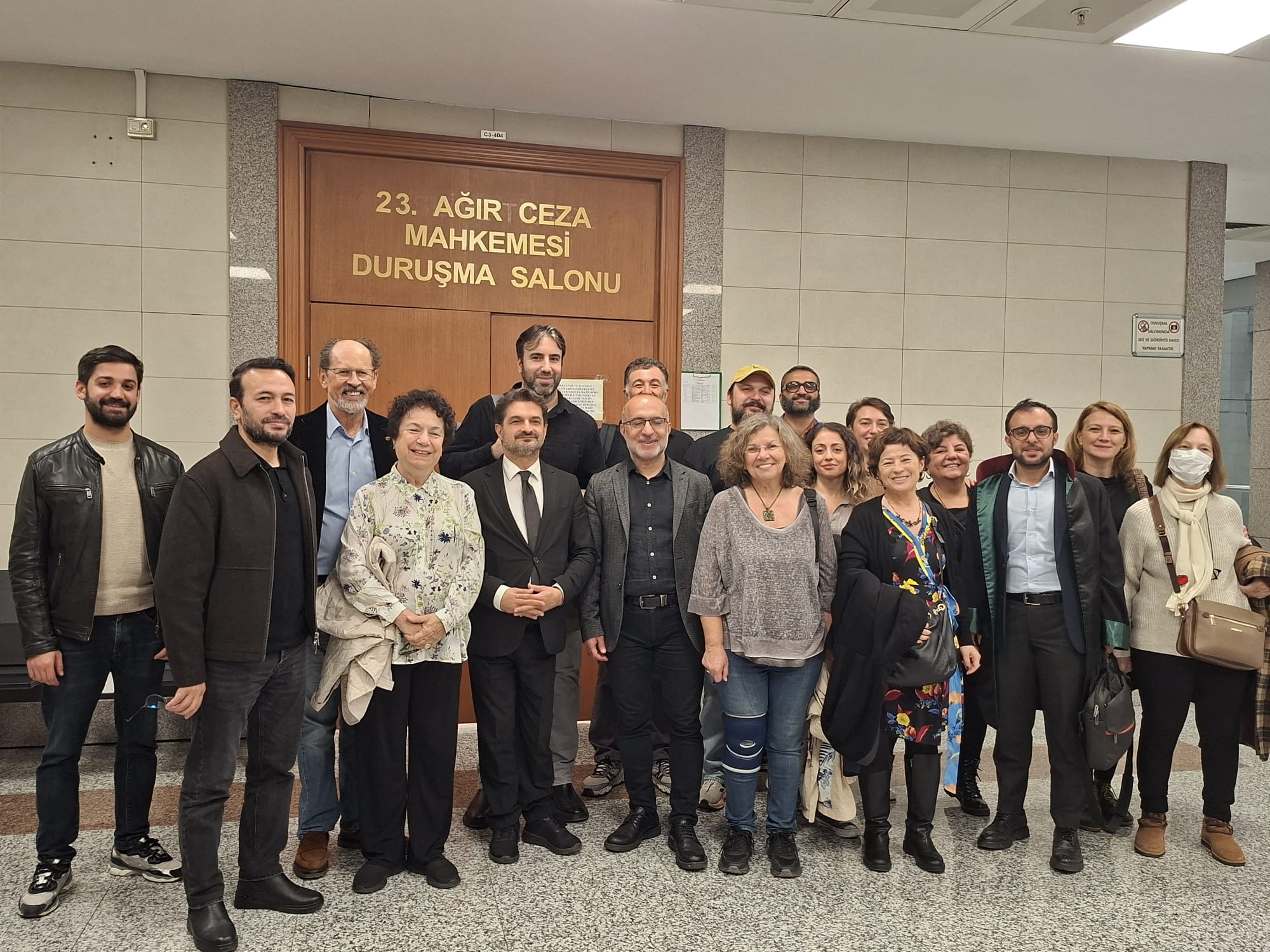
PEN Norway monitored the final hearing in the trial of writer Yavuz Ekinci, whose novel Rüyası Bölünenler (Dream Divided) was used as grounds to charge him with “terrorist propaganda.” The İstanbul 23rd High Criminal Court dismissed the case after determining that it had not been filed within the legally required timeframe. We welcome the end of the judicial harassment directed at Ekinci.
At the same time, we underline once again that such a prosecution should never have been initiated against a work of fiction in the first place. We hope that judicial authorities in Türkiye will, in the future, uphold their professional duty to protect freedom of expression rather than criminalise it. You can read our full hearing report for detailed observations and legal analysis.
On November 10, 2025, the 23rd High Criminal Court of İstanbul delivered its judgment at the fifth hearing in the trial of writer Yavuz Ekinci, who was on trial on the charge of ‘disseminating propaganda in favour of an armed terrorist organization,’ over his novel Rüyası Bölünenler [Dream Divided]. The court ruled to dismiss the case due to statute of limitations as the case was not filed within the time frame stipulated by the law.
In addition to PEN Norway, Kenan Kocatürk, Chairman of the Board of Directors of the Turkish Publishers Association, Baran Seyhan, CHP Party Assembly Member, Media and Law Studies Association (MLSA), Everest Publishing, which publishes Yavuz Ekinci’s books, as well as publishers, editors, friends and readers observed the hearing.
The process that led to the prosecution of Yavuz Ekinci concerning his novel Rüyası Bölünenler, published in 2014, began with a complaint filed with the Presidency’s Directorate of Communications (CİMER) on February 8, 2023. Previously 23rd High Criminal Court of İstanbul had dismissed the case against Ekinci on the grounds that he had already been charged with disseminating propaganda for a terrorist organisation. However, after this verdict was overturned by the Regional Criminal Court of Appeal of İstanbul, the case was brought once again before the 23rd High Criminal Court of İstanbul. In the hearing held on July 9, 2025, the court decided to comply with the Istanbul Regional Criminal Court of Appeal’s ruling for reversal and to inquire whether a copy of the novel Rüyası Bölünenler was submitted to the Chief Public Prosecutor’s Office before publication, as stipulated in the Press Law, and if so, on what date it was submitted.
The date of submission of the novel to the Chief Public Prosecutor’s Office was of central importance for the court’s judgment. As per Article 26 of the Press Law, a criminal case concerning a printed work can only be filed within six months from the date of delivery of the work to the Chief Public Prosecutor’s Office. For published works that have not been submitted to the Chief Public Prosecutor’s Office, the time period begins from the date the Chief Public Prosecutor’s Office learns of the criminal act, and in any case, this period cannot exceed the time limits stipulated in the relevant article of the Turkish Penal Code (TPC) regarding the statute of limitations for prosecution.
In the case brought against Yavuz Ekinci on the grounds of his novel Rüyası Bölünenler, these deadlines were exceeded in every respect. As explained in detail by the author’s lawyer, Can Ekinci, during our interview, the prosecutor did not initiate any proceedings against the novel Rüyası Bölünenler, which had been submitted to the Office of the Chief Public Prosecutor prior to its publication in 2014, within six months of its submission. If the claim is that the book was not submitted to the prosecutor’s office, the case should still have been initiated within six months from the date on which the prosecutor became aware of it (that is, the date the complaint filed with CİMER against the book was reported to the prosecutor by the law enforcement authorities, and the prosecutor requested a seizure order from the Magistrate’s Court); however, this period has also been exceeded. Moreover, considering that the book was published in 2014, it is clear that the general eight-year statute of limitations applicable in criminal law has also been exceeded.
Since there was no response to the inquiry regarding the date on which a copy of the novel was delivered to the Chief Public Prosecutor’s Office, the 23rd High Criminal Court had adjourned the case in the previous hearing, held on October 6, 2025, to November 10, to await this response. In the response received within this period and added in the case file, it was stated that the novel Rüyası Bölünenler had been submitted to the prosecutor’s office following a complaint filed with the Presidency’s Directorate of Communications (CİMER) on 8 February 2023, and that there was no prior record of its receipt.
At the hearing on 10 November 2025, the prosecutor considered this response and gave a final opinion recommending that the case be dismissed on the grounds of the statute of limitations. Yavuz Ekinci and his lawyer, Can Ekinci, who were given the floor regarding the final opinion, reiterated their defences from previous hearings and requested that the case be evaluated within the scope of freedom of the press and freedom of expression and that a verdict of acquittal be issued. After a short recess, 23rd High Criminal Court of İstanbul decided to dismiss the case due to statute of limitations.
Yavuz Ekinci, whom we spoke to after the verdict, stated that he was satisfied with the decision handed down by the court, but that they would nonetheless continue to pursue their request for a verdict of acquittal. He said, “The court decided to dismiss the case because it was not filed in due time. However, we believe that a novel should not be the subject of a lawsuit and therefore we maintain that an acquittal is the appropriate decision.”
Yavuz Ekinci’s lawyer, Can Ekinci, stated that they had repeatedly argued since the first hearing that the case had not been filed within the time limit prescribed by law, that the court had ignored this point, but only examined it after its initial decision was overturned on appeal. Lawyer Ekinci stated that while their main objective and request was for a verdict of acquittal, they had also anticipated that the court would issue a dismissal on the grounds of the statute of limitations, knowing that courts often avoid issuing an acquittal based on freedom of expression grounds when other means of concluding the case are available. Regarding the subsequent process, Lawyer Ekinci stated that they would pursue an appeal against the 23rd High Criminal Court’s dismissal on the grounds that the writing of the novel Rüyası Bölünenler did not constitute the crime of disseminating propaganda and that the court failed to grant an acquittal based on an assessment of the facts through the protections granted for press and expression freedom. In addition, Lawyer Ekinci stated that they want to see the novel published once again for the readers in Turkey and that to that aim they will continue to pursue their individual application filed with the Constitutional Court on April 12, 2023, on the grounds of violation of the ‘right to a fair trial’ and ‘freedom of expression,’ against the 7th Magistrate’s Court decision of March 14, 2023, to ban and confiscate the said novel.
You can read the Turkish version of the case below
Yazar Yavuz Ekinci’nin Terör Örgütü Propagandası Suçlamasıyla Yargılandığı Dava Düştü
Yazar Yavuz Ekinci’nin Rüyası Bölünenler romanı gerekçe gösterilerek, ‘Silahlı Terör Örgütü Propagandası’ suçlamasıyla yargılandığı davada, 10 Kasım 2025 tarihinde görülen beşinci duruşmada İstanbul 23. Ağır Ceza Mahkemesi kararını açıkladı. Mahkeme davanın yasada öngörülen sürede açılmamış olması sebebiyle düşmesine karar verdi.
Duruşmayı PEN Norveç’in yanı sıra, Türkiye Yayıncılar Birliği Yönetim Kurulu Başkanı Kenan Kocatürk, CHP Parti Meclisi Üyesi Baran Seyhan, Medya ve Hukuk Çalışmaları Derneği (MLSA), Yavuz Ekinci’nin kitaplarını yayımlayan Everest Yayınları başta olmak üzere yayıncılar, editörler, yazar dostları ve okurları izlediler.
Yavuz Ekinci’nin 2014 yılında yayınlanan Rüyası Bölünenler romanı ile ilgili olarak yargılanmasına yol açan süreç 8 Şubat 2023’te Cumhurbaşkanlığı İletişim Merkezi’ne (CİMER) yapılan şikâyetle başlamıştı. İstanbul 23. Ağır Ceza Mahkemesi, Ekinci hakkında terör örgütü propagandası suçlamasıyla mükerrer dava açılmasını gerekçe göstererek davanın reddine karar vermişti. Ancak bu kararın İstanbul Bölge Adliye Mahkemesi tarafından bozulmasının ardından, dosya yeniden İstanbul 23. Ağır Ceza Mahkemesi önüne geldi. Mahkeme 9 Temmuz 2025 tarihinde görülen duruşmada İstanbul Bölge Adliye Mahkemesi’nin bozma kararına uymaya ve Rüyası Bölünenler romanının Basın Kanunu’nda öngörüldüğü üzere, bir kopyasının basılmadan önce Cumhuriyet Başsavcılığı’na teslim edilip edilmediğinin ve edildi ise hangi tarihte teslim edildiğinin araştırılmasına karar verdi.
Romanın Cumhuriyet Başsavcılığı’na teslim tarihi mahkemenin vereceği karar açısından merkezi önem taşıyordu. Zira Türkiye’de yürürlükte olan Basın Kanunu madde 26 gereği, bir basılmış eserle ilgili ceza davasının, söz konusu eser Cumhuriyet Başsavcılığı’na teslim edildiği tarihten itibaren altı ay içinde açılması zorunludur. Cumhuriyet Başsavcılığı’na teslim edilmemiş basılmış eserler yönünden süre, Cumhuriyet Başsavcılığı’nın suç oluşturan fiili öğrenme tarihinden itibaren başlar ve her durumda bu süre, Türk Ceza Kanunu’nun dava zamanaşımına ilişkin maddede öngördüğü süreleri aşamaz.
Yavuz Ekinci’ye karşı Rüyası Bölünenler romanı gerekçe gösterilerek açılan davada ise bu sürelerin tamamı aşılmış durumdaydı. Yazarın avukatı Can Ekinci ile yaptığımız görüşmede kendisi bize Rüyası Bölünenler romanının 2014 yılında basılmadan önce Cumhuriyet Başsavcılığı’na teslim edildiğini, ve savcılığın bu tarihten itibaren 6 ay içinde kitaba karşı dava açmadığını belirtti. Kitabın savcılığa teslim edilmediği iddia ediliyorsa, savcının haberdar olduğu, yani kitap aleyhine CİMER’e yapılan başvurunun kolluk tarafından savcılığa bildirildiği ve savcılığın Sulh Ceza Hakimliği’nden kitapla ilgili olarak el koyma talebinde bulunduğu tarihten itibaren 6 ay içinde davayı açması gerekirken, bu süre de aşılmış durumdadır. Ayrıca kitabın 2014
yılında yayımlandığı dikkate alındığında ceza hukukunda geçerli sekiz yıllık genel zamanaşımı süresinin de aşıldığını görülmektedir.
Romanın bir kopyasının Cumhuriyet Başsavcılığı’na hangi tarihte teslim edildiği yönündeki araştırmaya yanıt gelmediği için, 23. Ağır Ceza Mahkemesi 6 Ekim 2025 tarihinde görülen bir önceki duruşmada bu yanıtın gelmesinin beklenmesi için davayı 10 Kasım tarihine ertelemişti. Bu süre içinde dava dosyasına verilen yanıtta ilgili romanın 8 Şubat 2023’te Cumhurbaşkanlığı İletişim Merkezi’ne (CİMER) yapılan şikâyet sonrasındaki süreçte savcılığa teslim edildiği, daha öncesinde savcılıkta herhangi bir alındı kaydı bulunmadığı bilgisi iletildi.
10 Kasım 2025 tarihindeki duruşmada savcı, bu yanıtı da değerlendirerek davanın zamanaşımı gerekçesiyle düşmesi yönünde mütalaa verdi. Duruşmada mütalaaya ilişkin söz verilen Yavuz Ekinci ve avukatı Can Ekinci ise daha önceki duruşmalardaki savunmalarını tekrar ettiler ve dosyanın basın ve ifade özgürlüğü kapsamında değerlendirilmesini ve beraat kararı verilmesini talep ettiler. Verilen kısa aranın ardından İstanbul 23. Ağır Ceza Mahkemesi davanın zamanaşımı sebebiyle düşmesine karar verdi.
Kararın ardından görüştüğümüz Yavuz Ekinci mahkeme tarafından verilen karara memnun olduğunu, bununla birlikte kendilerinin beraat kararı verilmesi yönündeki taleplerini sürdüreceklerini söyledi. “Mahkeme dava süresinde açılmadığı için düşme kararı verdi. Ancak biz bir romanın dava konusu olmaması gerektiğini ve bu nedenle de beraat kararı verilmesi gerektiğini düşünüyoruz” dedi.
Yavuz Ekinci’nin avukatı Can Ekinci de davanın kanunda öngörülen sürede açılmadığını kendilerinin ilk duruşmadan itibaren bunu ısrarla söylediklerini, mahkemenin bunu dikkate almadığını, ancak ilk kararının istinaf incelemesi sonucunda bozulmasından sonra bu hususa dair bir inceleme yaptığını söyledi. Av. Ekinci kendilerinin temel beklentileri ve taleplerinin beraat kararı verilmesini olduğunu, ancak mahkemelerin bir başka şekilde davaları sona erdirme imkanları olduğunda ifade özgürlüğü yönünden bir değerlendirme ile beraat kararı vermekten kaçındıklarını bildiklerinden, zamanaşımı gerekçesiyle düşme kararı alınacağını da tahmin ettiklerini söyledi. Av. Ekinci bundan sonraki süreçle ilgili olarak, dava konusu Rüyası Bölünenler romanının yazılması ile terör propagandası suçunun oluşmadığı, mahkeme tarafından basın ve ifade özgürlüğü kapsamında bir değerlendirme yapılarak beraat kararı verilmediği için 23. Ağır Ceza Mahkemesi’nin düşme kararına karşı istinaf yoluna başvuracaklarını ifade etti. Bunun yanı sıra İstanbul 7. Sulh Ceza Hakimliği’nin 14.03.2023 tarihinde söz konusu romanın yasaklanması ve toplatılması yönünde aldığı karara karşı Anayasa Mahkemesi’ne 12.04.2023 tarihinde ‘adil yargılanma hakkı’ ve ‘ifade özgürlüğü’ ihlali sebebiyle yaptıkları bireysel başvurularını da, romanının yeniden Türkiyeli okurlarla buluşabilmesi için takip etmeye devam edeceklerini belirtti.


 Graphics: PEN international