
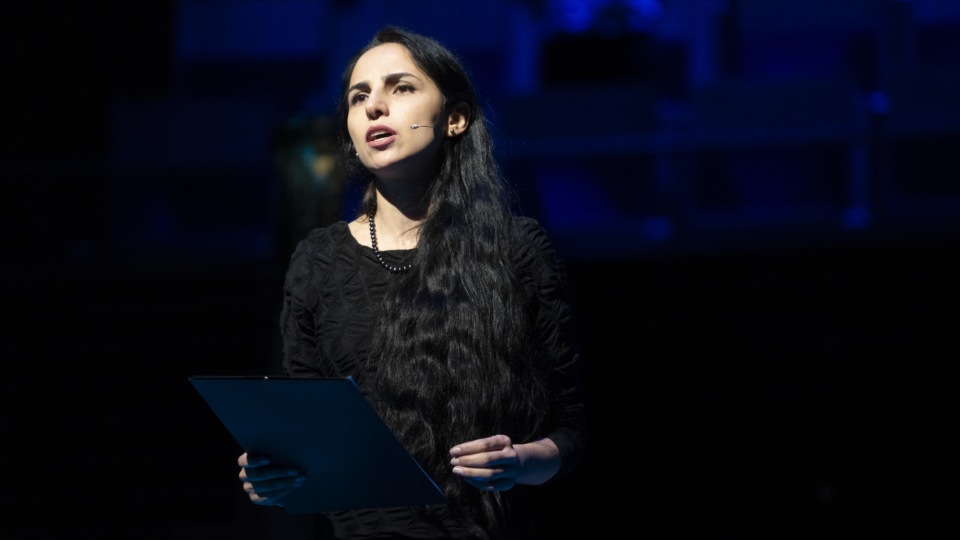
From Evin to Norway: The Poet Who Refused to Remain Silent
From the shadowed corridors of Evin prison to classrooms and literary gatherings in Norway, Fatemeh Ekhtesari has lived a life few could imagine.
Once censored and banned in Iran for her fearless explorations of bodies, desire, and freedom, she now reads her poetry to attentive Norwegian teenagers. Yet even here, in a country often seen as a refuge for persecuted artists, voices like her face new challenges.
A Refuge Under Threat
In 2017, Ekhtesari took up an International Cities of Refuge Network (ICORN) residency in Lillehammer, Norway. Since its launch, ICORN has hosted dozens of persecuted artists, writers, activists, and journalists.
However, in October, the Norwegian government reduced the quota for refugees. In the fiscal budget proposal, the government proposed 100 UN quota refugees, down from 5,000. The reduction threatens to dramatically impact ICORN’s ability to provide safe havens.
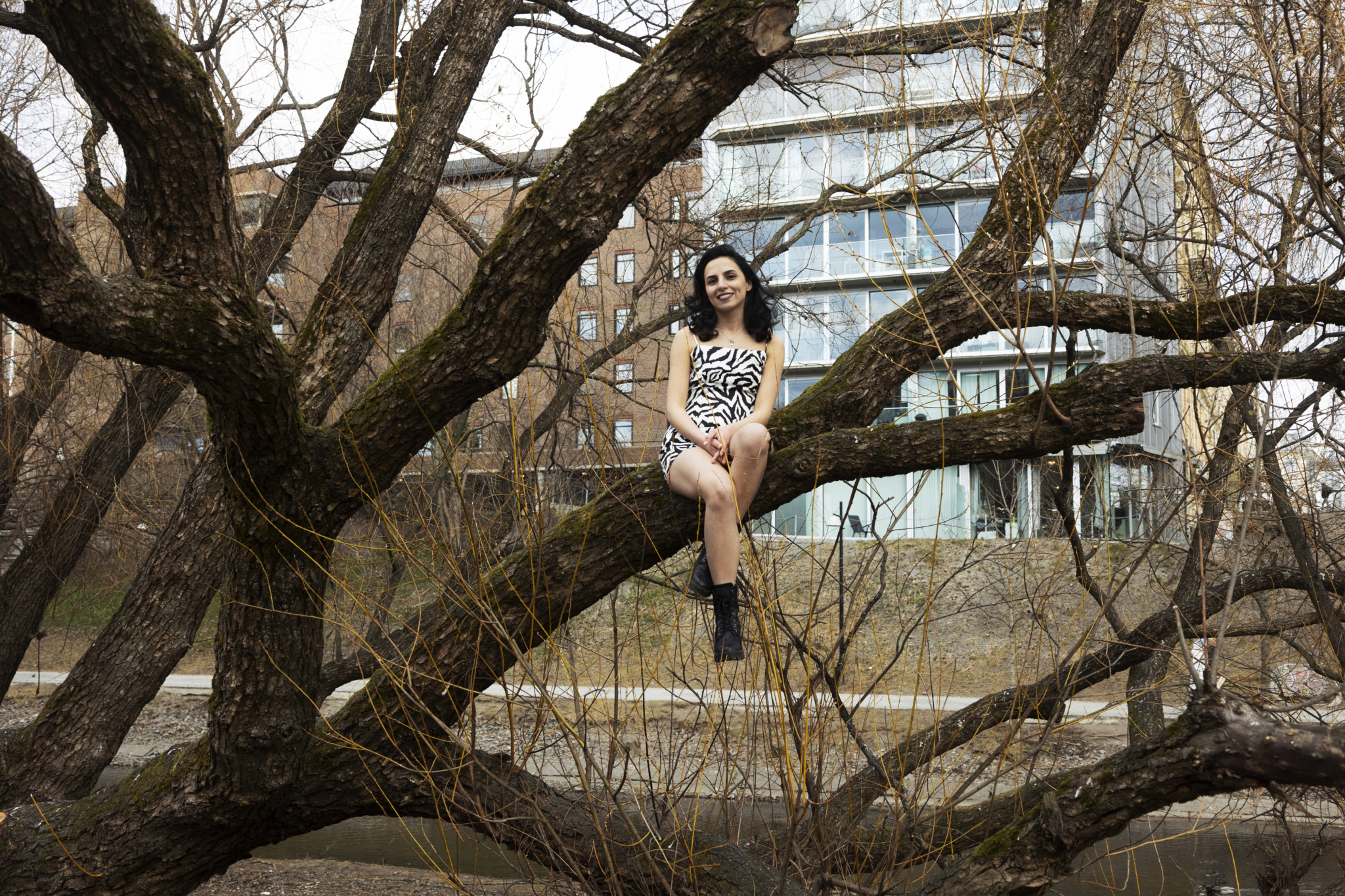
Photo by Linda Bournane Engelberth Aschehoug
“The news about the Norwegian government reducing the quota for refugees is truly worrying,” she says.
It’s not only about closing the door on a few refugees, but about a symbolic message, that the voice of freedom and the responsibility to stand against oppression are no longer priorities.
“It’s not only about closing the door on a few refugees, but about a symbolic message, that the voice of freedom and the responsibility to stand against oppression are no longer priorities.”
The Price of Being a Writer
Ekhtesari’s courage is a reminder that the fight for freedom never ends. In Iran, her first book, A Feminist Discourse Before Cooking Potatoes, was banned, and friends were arrested, tortured, or killed during the 2009 uprising.
I knew from my teenage years that living freely was not possible, that even being yourself was not free
She too was imprisoned at notorious Evin Prison, spending two years under the strain of court hearings and bail.
“I knew from my teenage years that living freely was not possible, that even being yourself was not free,” she recalls. “And, of course, being an independent writer comes at a price.”
The Female Body as a Literary Starting Point
Her journey began in an unexpected place: a midwifery clinic. Trained as a midwife, she sees her early medical studies as inseparable from her poetry.
“My field of study, midwifery, brought me closer to women. It allowed me to see women from many angles, to understand their bodies and their lived experiences more deeply, and to witness their pain and struggles,” she explains.
“Perhaps one reason the figure of woman and the female body appear so strongly in my poems is this long, lived familiarity with different facets of womanhood.”
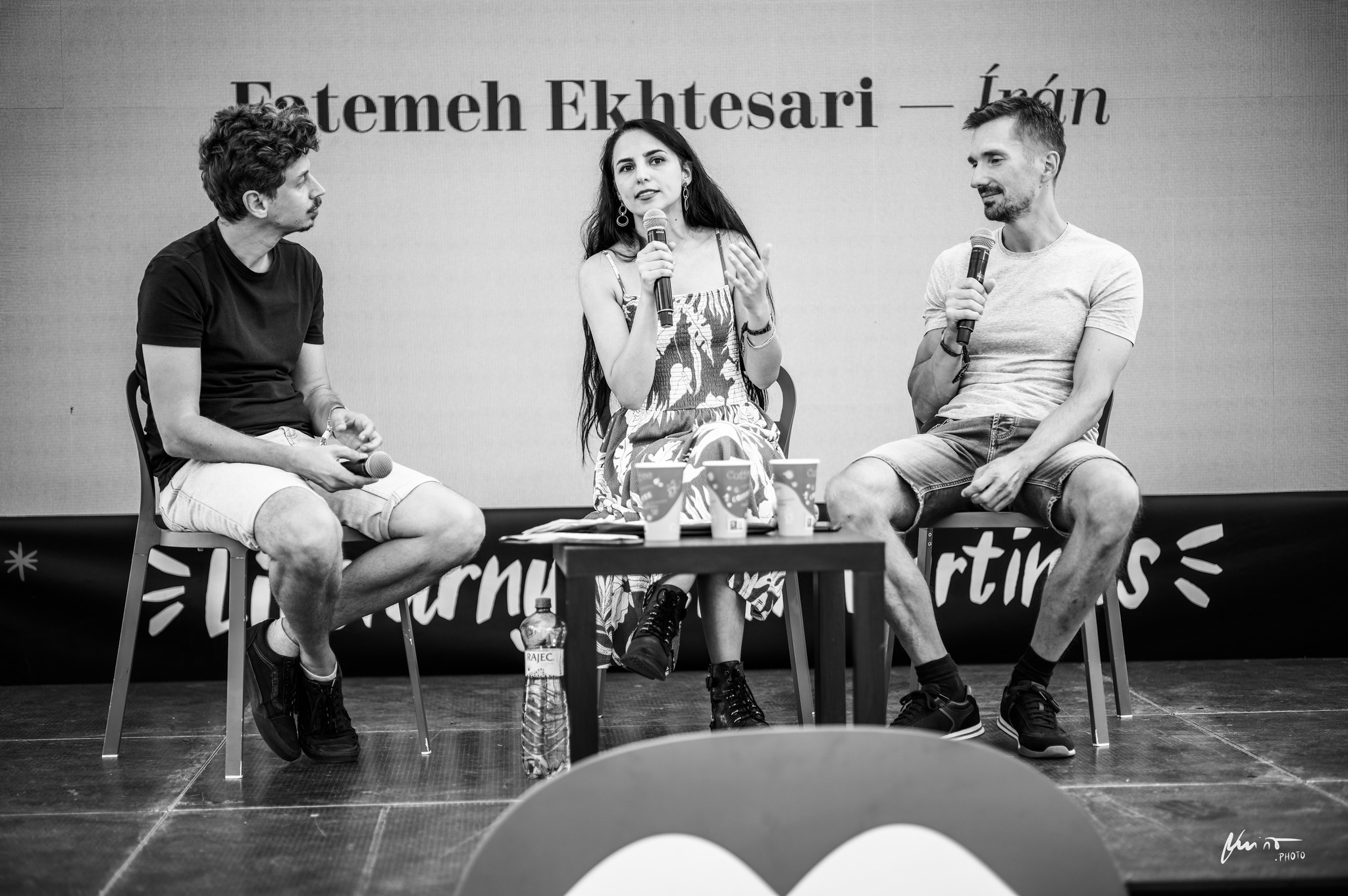
Photo provided by Fatemeh Ekhtesari
She challenges the common perception that midwifery is solely about creation and life. “That’s true, but it’s only fifty per cent of it. The other fifty, which is rarely discussed, deals with a woman’s control over her own body: contraception, abortion, and alongside that, orgasm and pleasure. To me, these belong in poetry just as much as creation does, perhaps even more.”
Defying the Regime: A Dangerous Act in Iran
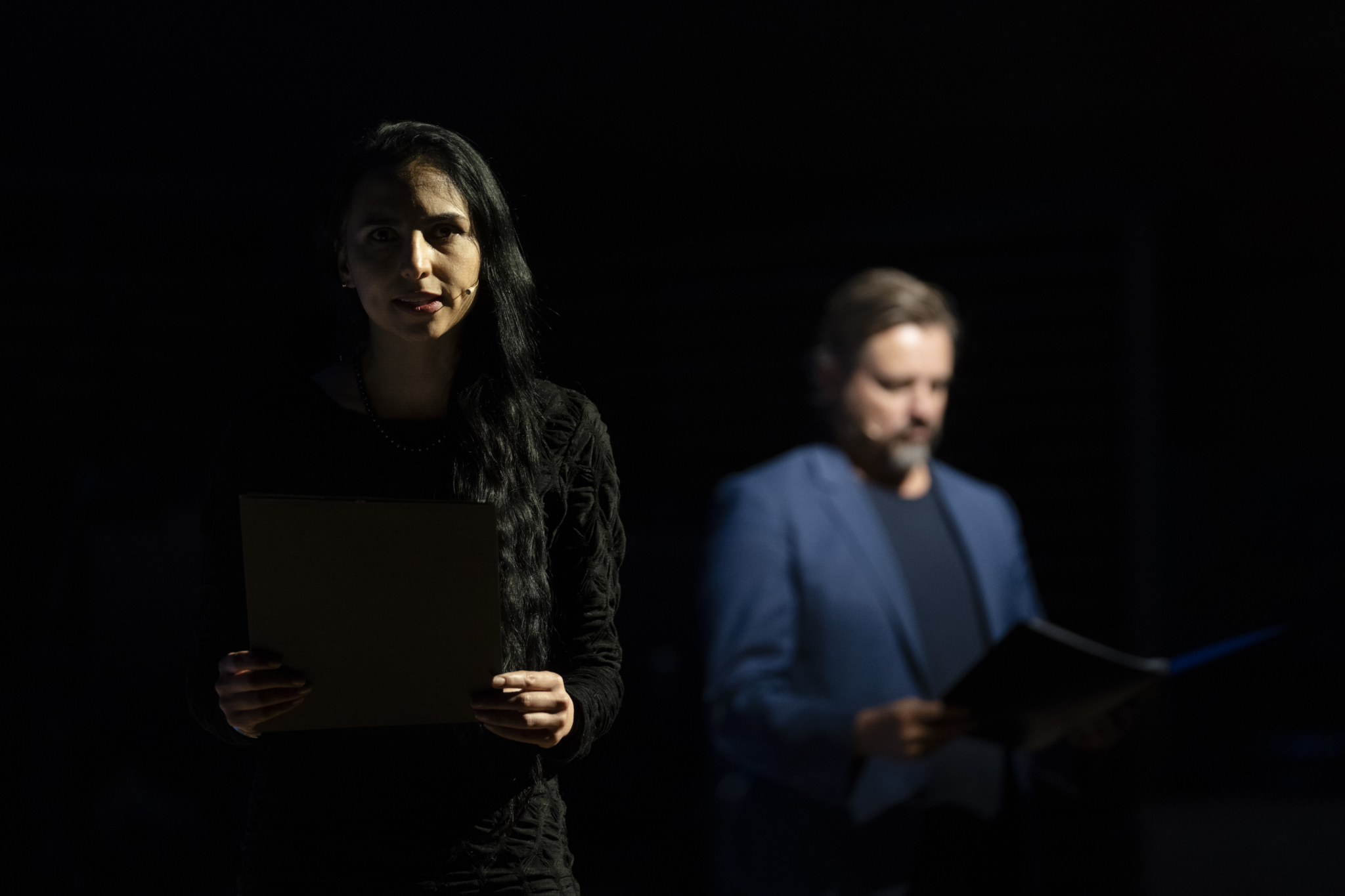
Photo by Marie Von Krogh
Her poetry is not only intimate but defiant. She recalls the moment she discovered that writing could be an act of resistance as well as self-expression:
“The first time was when my first book was completely denied publication. The question is why those poems were censored, and the answer is that they weren’t merely personal expressions. They spoke, in a free language, of a free life.”
This resistance carried real danger. During the 2009 uprising, she watched friends disappear into prisons, some never returning. She too was imprisoned in Evin, where fear and uncertainty became daily companions.
“It was very difficult to be the same person afterward,” she recalls.
It was writing itself that freed me from the invisible prison that clung to my skin after Evin
“But it was writing itself that freed me from the invisible prison that clung to my skin after Evin… just seeing a name could reignite that fearless spirit that once read and created without hesitation, the one I thought I had lost forever.”
She credits her survival to her community.
Underground Community
“When I joined the writing workshops led by my literature teacher, Mehdi Mousavi, I became part of a literary group. We read, learned, supported one another, and worked collectively. That sense of community gave us energy to keep going.”
In Iran, underground literature is fragile and secretive, yet alive sustained by writers and readers who refuse silence.
“In Iran, I had two kinds of audiences: both passionate, both extreme. The supportive group followed my work with remarkable enthusiasm, while the opposing group, usually aligned with the regime, responded with insults, trolling, and censorship. In Norway, such extreme reactions almost never happen. My readers here engage calmly and respectfully. They ask questions, and sometimes, when I read in Persian, I see them quietly crying. It’s a connection woven from silence and emotion.”
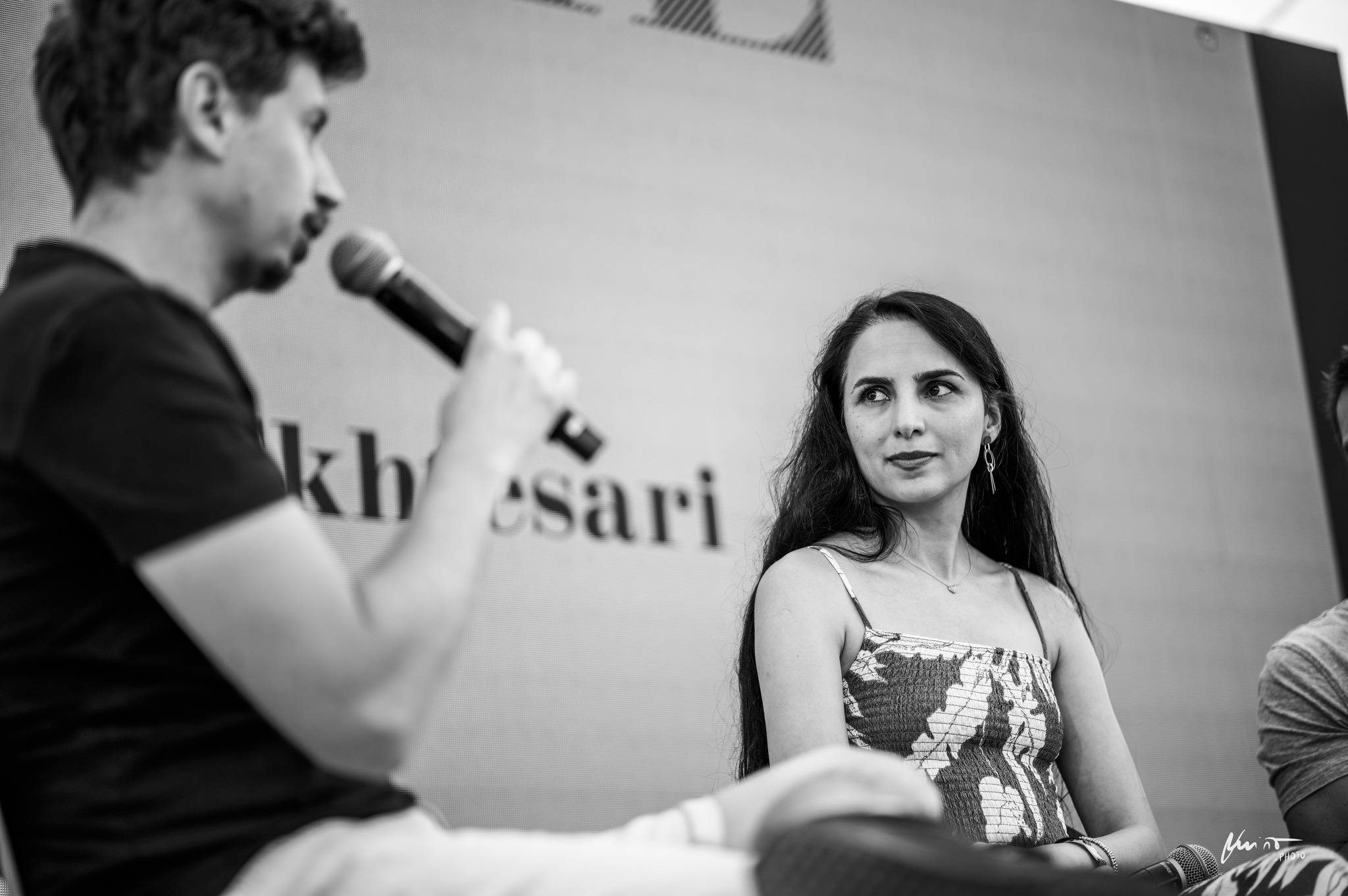
Photo provided by Fatemeh Ekhtesari
The Power of Solidarity
Her activism extends beyond the pages. She voluntarily works for PEN International and PEN Norway, which she sees solidarity as a tool against authoritarianism.
PEN is not just an institution. It’s a refuge for words
“PEN is not just an institution; it’s a refuge for words… These organizations can challenge dictatorships simply by asking questions, about artistic freedom and the freedom of artists.”
Hope in The Classroom
Even amid mass executions, unlawful detentions, and the relentless crackdown on women and rights activists in Iran, she refuses to lose hope. Hope, she insists, comes from awareness.
“Through the DKS (Den Kulturelle Skolesekken) I visit many schools across Norway… Hearing those few deep questions, sensing that something in them still beats for knowledge, knowing that the poems and words stay with them when they go home; and that alone gives me hope.”
The Courageous Iranian Women
She sees the courage of Iranian society mirrored in small but profound acts of defiance online and on the streets.
“Fifteen years ago, when I posted a photo of myself without a hijab on Facebook, people reacted with anger. Today, that same society is brave enough to walk unveiled in the streets despite the heavy price, showing that the right to control one’s own body belongs only to oneself.”
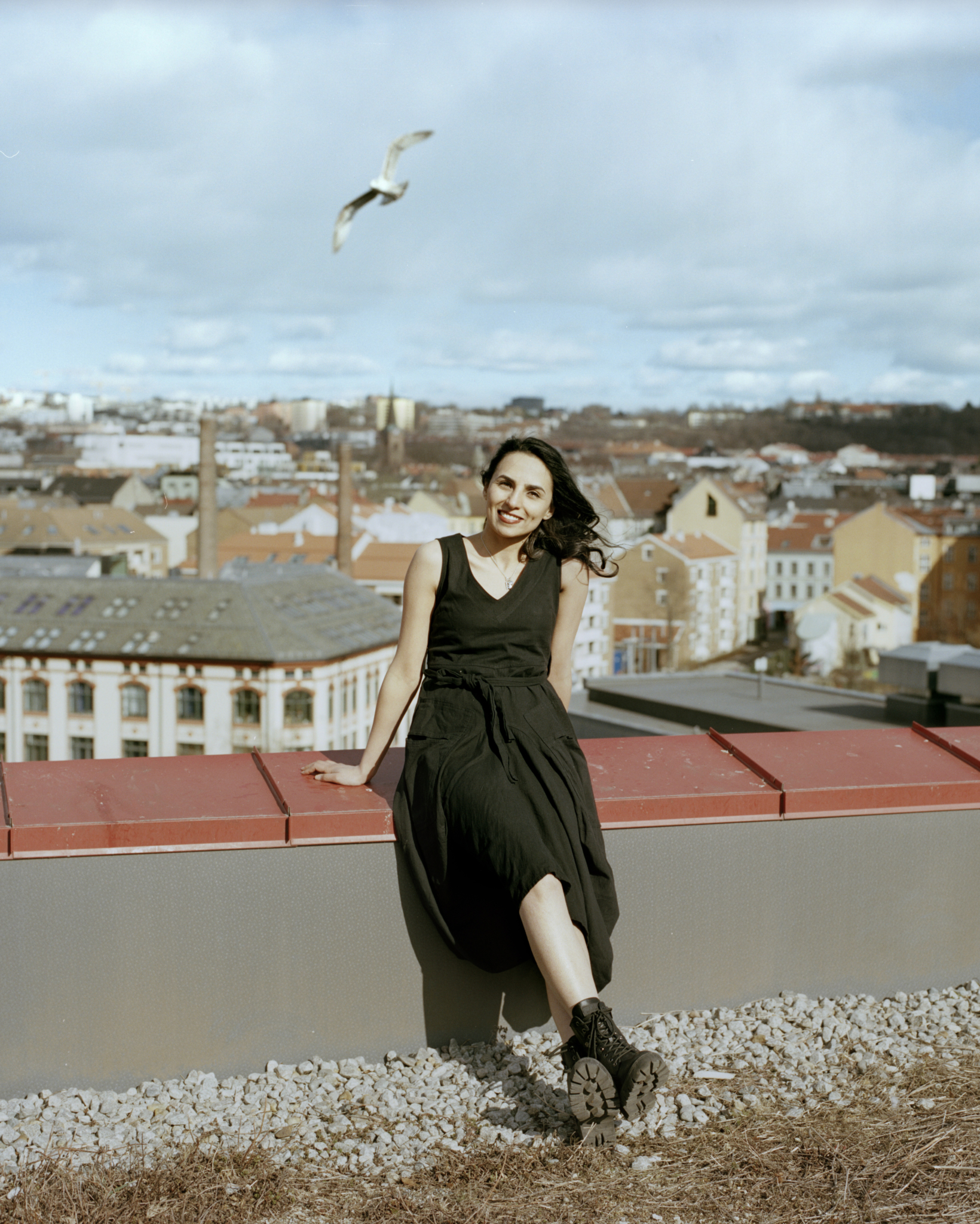
Photo by Linda Bournane Engelberth, Aschehoug.
A Life Reclaimed Through Poetry
From midwifery wards to prison cells, from underground workshops to Norwegian classrooms, Ekhtesari’s poetry is a continuous dialogue with freedom, resilience, and the bodies that live it.
Literature is not merely art but it is life itself, refused, reclaimed, and celebrated
In her words, literature is not merely art but it is life itself, refused, reclaimed, and celebrated.
The Free Cities provide a safe haven for persecuted dissenters. Want to learn more? Read about the Free City Scheme and the role of PEN Norway

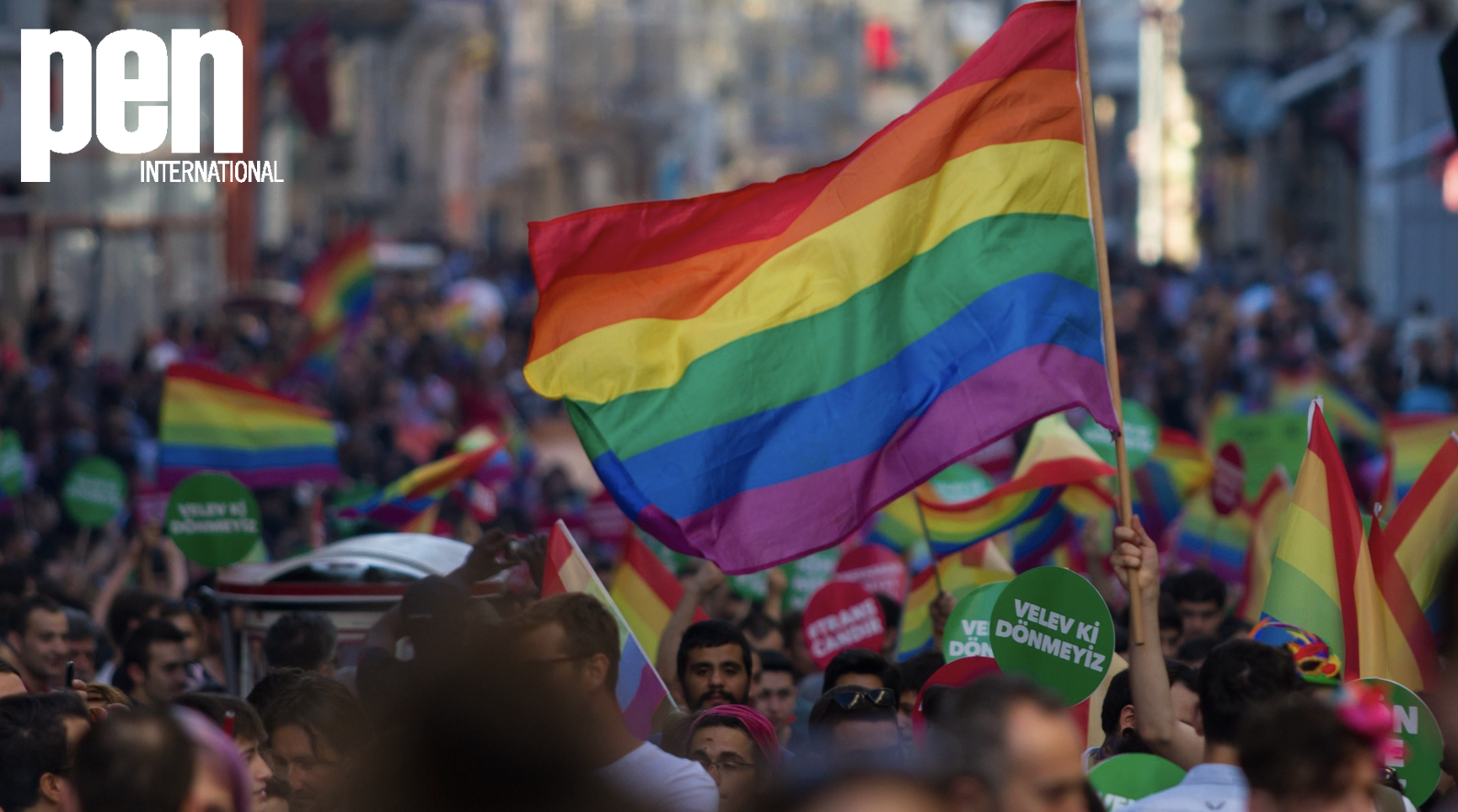
 Graphics: PEN international