Beneath the Shadow of the Night. On Venezuela’s Long Struggle for Democracy
Forfatter og poet Carlos Egaña ble voksen i skyggen av et stadig mer autoritært Venezuela. I dette essayet, skrevet til Norsk PEN fra eksil, beskriver han livet under Maduros brutale og undertrykkende regime, venezuelaneres lange kamp for demokrati og rettigheter, og et håp om at verden åpner øynene for deres lidelser.
(…) for it was the approaching dawn that held him in its spell, that ‘promise kept each morning’ that the earth, along with the town and his own person, would emerge from beneath the shadow of the night.
– László Krasznahorkai
His boxers smeared with feces, his gaze lost and dazed, Juan Requesens is asked to give a spin for the camera. Hours earlier, after being confined to the depths of El Helicoide – a spiraling, pyramid- like building that has become Latin America’s largest torture center – he “confessed” he had planned to orchestrate a coup against Nicolás Maduro; a confession he later told his lawyer he did not remember saying. Despite the harsh accusations, no material evidence for this was produced; after a persistent campaign led by his sister and myriad activists, he was released two years later.
The day before Requesens was detained, he gave an impassioned speech before congress in which he repeated the phrase “I refuse to give up” while describing the state of the country. The year was 2018: the country’s inflation rate had reached 1,698,488%, around 3 million Venezuelans had fled the country, and the sanctions to Venezuela’s oil industry that Maduro’s cadre frequently mention to excuse the country’s crisis were yet to be enacted. To many, the message the government sent with Requesen’s broadcast humiliation was clear: the truth will set you behind bars. And the hundreds of folks that have been imprisoned and tortured for denouncing last year’s electoral fraud show that that message is as crystalline as ever.
The message the government sent (…) was clear: the truth will set you behind bars. And the hundreds of folks that have been imprisoned and tortured for denouncing last year’s electoral fraud show that that message is as crystalline as ever.
Venezuela’s descent into tyranny did not happen from one day to the next; it was a gradual, tortuous process – a process that began with Hugo Chávez’s assumption as president in 1999. While disparaged by many for his failed coup d’etat attempt in 1992, his undeniable charisma and scathing critiques of the country’s flawed democracy – which, although exceptional in the region, had failed to reduce inequality significantly in its latter years – led him to victory in the polls. During this first administration of his, he directed an effort to renew Venezuela’s constitution through a transitional constituent assembly whose members, the vast majority of Chávez’s party, were chosen in an election that had an abstention rate of over 60.9%. This process, which expanded presidential powers and included the renewal of all branches of government, allowed constituent deputies to name and approve Chávez sympathizers as members of the country’s judiciary branch and the Consejo Nacional Electoral, an organ responsible for overseeing voting processes. It also allowed, once the new constitution was approved, for another presidential election that Chávez won again, as well as snap legislative elections in which his party won the majority of the seats – before this whole venture, he had but a few representatives in congress. Impartiality started to become difficult to pronounce; the bases for the democratic erosion of Venezuela were set.
El Comandante’s second term (2001-2007) was marred by instability. As a figure that invited polarization – “Either you are with the revolution or you are against it; either you are with Chávez or you are against him,” he liked to say – many in the country disliked him intensely, but the traditional parties whose failures paved the way for his success were also by and large unpopular. Massive protests – one of which was instrumentalized by a small group of military officers and businessmen to push a short-lived coup, a perfect excuse for the man to purge the country’s armed forces and reduce it to loyalists – and a general strike showcased the widespread discontent with Chavismo in many sectors, but the government remained firm in its road toward total control.
Voting processes also became considerably murky; while it is difficult to say that they were rigged, they were certainly done in unfair conditions. Consider the 2004 recall referendum, a plebiscite of sorts contemplated in Venezuela’s constitution that permits a presidential impeachment through popular vote. To call for this, whoever proposes the motion must compile a number of signatures equal or higher than 20% of the national electorate. After this was achieved, Chávez requested the list of signatories to be made public, which the Consejo Nacional Electoral acceded to. This infamous list brought about thousands of firings of public employees who were seen as traitors to the revolution, and made myriads – especially those who have depended on public assistance to survive – think twice about voting against the government in future occasions.
Chávez’s third term was, in contrast, a much more stable period – a period of pacification through spending, corruption, and force. The boom of oil prices of those years allowed for large sums of money to grandiose seeming housing, literacy, public health, and affordable goods programs, which temporarily alleviated the basic needs of many of the country’s poor; their success, nonetheless, has historically been contested. This was done while expropriations of businesses became common – measures that did not put enterprises in the hand of workers, but of party loyalists who mismanaged them and ransacked their funds. Deals for infrastructure projects with privates that the government considered friendly to the revolution were paid handsomely, yet oftentimes such projects were incomplete or poorly delivered; the power cuts various areas of the country have consistently lived through since this era are a result of this. And although Chávez at first very rightfully pointed out the overreliance on oil production and imports as a problem in Venezuela’s twentieth century, he increased it massively to the point of not just losing opportunities to diversify the country’s economy, but basically reducing its local industries to dust.
This was, as well, the most violent time in Venezuela’s contemporary history. Homicides, kidnappings, and petty thefts soared to the point of Caracas becoming the world’s most dangerous city for a good amount of years.
This was, as well, the most violent time in Venezuela’s contemporary history. Homicides, kidnappings, and petty thefts soared to the point of Caracas becoming the world’s most dangerous city for a good amount of years. Colectivos, pro-Chávez paramilitary groups, were empowered to have a central role in distributing government-acquired goods to underprivileged communities, as well as in efforts to intimidate and punish folks who would dare speak out against the government too loudly. Members of FARC, known to be involved in drug trafficking since decades ago, and of other belligerent groups were also given safe haven in the country, helping them expand their operations at a transnational level.
When student-led protests became a common occurrence in the country, Chávez openly called for military officers to gas them to submission.
Symbolically, violence was exerted in a top-down manner in many ways, be it by refusing to renew the broadcasting licenses of media or by dehumanizing opponents of Chavismo in rallies and state-run TV channels. When student-led protests became a common occurrence in the country, Chávez openly called for military officers to gas them to submission. And even though these protests in 2007 motivated citizens to vote against a constitutional reform that would allow, among other things, indefinite reelection – a referendum the government lost – Chavista deputies violated the will of the people and passed the contents of such reform two years later, paving the way for El Comandante to run for president once again. Indeed, he did so, despite visibly suffering from cancer; indeed, he won, helped out financially by the Brazilian conglomerate Odebrecht; and indeed, he passed away before he was installed for his fourth period, leaving his vice president Nicolás Maduro in charge of his movement.
Many people thought that with Chávez’s death, sharing and agreeing instead of imposing would return to Venezuela’s social contract. After all, Maduro lacked the charisma and stamina that defined his predecessor’s personality, that convinced many to see him in good faith despite it all. The price of oil was also falling rapidly; it did not seem that the level of social spending that allowed for Chávez to cover many of his government’s misgivings, that allowed him also to sell cheap oil to countries that would defend him in the international stage, would be possible. But as the game over screen from Chrono Trigger states when you lose a battle: “the future refused to change.”
The years of Maduro in power have been the years of my journey into adulthood. 2013: when I began my studies in Law – a degree I would later abandon for Literature, partially because a good deal of the classes were based on how legal procedures should work in theory, with the caveat that in practice, corruption was king – and had the joy of making intriguing, fascinating friends out of my teenage bubble cut short quite quickly, for many would leave or start planning to leave Venezuela for freer, more decent living conditions. 2014: when I joined the Student Movement and swallowed, along many other young adults from all across the political spectrum and social strata, wads of tear gas as we marched through the streets of Caracas with the hope that government officials would hear our pleas, that public universities would finally receive the funding that had been extremely reduced over the years, that policemen would cease to stop young folks in their cars or as they took the subway home asking for bribes under unjustified threats of imprisonment; when, despite the popular call for reform, Maduro called for the country’s security officials to repress us heavily; when my friend Lorent Saleh, one of the leaders of that year’s protests, was sent to La Tumba, “a freezing basement, with black floors and white walls, without a clock,” as an exemplary punishment for us who dared to dream with democracy.
My friend Lorent Saleh, one of the leaders of that year’s protests, was sent to La Tumba, “a freezing basement, with black floors and white walls, without a clock,” as an exemplary punishment for us who dared to dream with democracy.
2015: when to the gleeful surprise of many, a united front of opposition leaders managed to win, or were allowed to win, the majority of seats in parliamentary elections – a majority that nonetheless did not translate into fresher, more plural legislation, for the Chavista-controlled Supreme Court would repeal over and over laws that were agreed on in congress, thus making this seeming opening of Venezuela’s political sphere an absolute lie. 2016: when the General Secretary of the United Nations declared that Venezuela was suffering a humanitarian crisis – something evident in the streets, for poverty grew so excruciating that folks walking all the way to far-off middle-class communities to eat from their trash cans became an usual sight – which the government denied, refusing external aid from other countries and international bodies as they did so; when I discovered and spread the news about Venezuela’s Arco Minero del Orinoco, a mega-mining project in Venezuela’s south that has displaced indigenous peoples in the zone and forced some to work in awful conditions, that – despite Maduro’s insistence that his is an ecosocialist government – has allowed foreign companies and armed groups from other countries like ELN and Wagner to exploit the mineral-rich region in ways that have obliterated its ecosystem. 2017: when after Vatican-backed dialogues between opposition leaders and Maduro officials broke down after the government failed to comply with their agreements, after Venezuela’s Supreme Court sentenced that it would hold all the functions of the legislative branch of government, a wave of protests much larger than the one from three years before erupted, and even though it managed to get a couple of Chavista officials to rethink their alliances and join the people in their cries for dignity, Maduro chose to persecute them harshly instead of hearing them out; when following months of chants for justice, the government called for sham elections to choose a new constituent assembly – elections that per Smartmatic, the company that installed Venezuela’s automated voting machines in 2004, did not have the same participation or results that the Consejo Nacional Electoral claimed. 2018: when my best friend had to flee the country after being framed as a terrorist by the Venezuelan government for co- directing an NGO that taught Model UN skills – public speaking, international relations awareness, and conflict resolution strategies – to kids in impoverished areas of Caracas, which was empowering young people to become leaders of communities where Chavismo had an iron grip; when millions of us, demoralized from the extreme repression we faced the year before, opposition ranks in disarray, boycotted early presidential elections that were summoned by the illegitimate constituent assembly – violating the guidelines for electoral processes that the law holds – and had Maduro declared as victor in a process that was widely condemned by the international community.
my best friend had to flee the country after being framed as a terrorist by the Venezuelan government for co- directing an NGO that taught Model UN skills – public speaking, international relations awareness, and conflict resolution strategies – to kids in impoverished areas of Caracas.
2019: when following article 233 of the constitution, Juan Guaidó – then president of Venezuela’s actual congress, member of a party that belonged to the Socialist International – assumed the presidency of an interim government that brought the hopes of myriads up, but lost support amid failed attempts to have military officers break off with Maduro through proposed amnesty laws, internal disagreements on how to better carry the mission of such interim government among the many parties that composed it, and quite embarrassing corruption scandals; when I, as the recently elected top student representative of my university, led along other talented students protests against Maduro believing we would finally get the change we’ve yearned for for so long, and faced the great guilt of exposing people to police and military repression; when a week-long blackout ravaged the whole nation and almost blew out the candle of hope that flickers in our hearts. 2020: when the day after my graduation ceremony, an awful pandemic was confirmed to have reached our shores and a tough-at-first lockdown was imposed on the population (perfect timing for Maduro, for shortly after severe gasoline shortages occurred in the country with the largest oil reserves in the world, a testament to the crude, cruel mismanagement of Venezuela’s oil industry); when after so many members and affiliates of Maduro’s government found themselves too sanctioned to spend their millions abroad, the country’s economy was dollarized anarchically, some expropriated businesses were privatized and transferred to Maduro- sympathizers in a non-transparent manner, and oases of new restaurants and clubs were opened as playgrounds for the Chavista oligarchy as inequality deepened. 2021: when after refusing to do so for so long, perhaps out of a naive and masochistic sense of patriotism, I left Caracas for New York City riding on a scholarship from NYU; when I faced my first hate crime as I was told by a stranger to go back to my country at a place called – ironically, I guess – International Bar.
I left Caracas for New York City riding on a scholarship from NYU; when I faced my first hate crime as I was told by a stranger to go back to my country at a place called – ironically, I guess – International Bar.
2022: when a drove of desperate compatriots with nothing else to lose rushed to the Darien Jungle and withstood the horrors of nature in search of minimally decent living conditions. 2023: when after so many years of division that Chavismo had orchestrated skillfully, opposition parties agreed it would be worthwhile to motivate people to participate in the upcoming presidential election massively despite the likelihood of fraud, and organized a successful primary where millions of Venezuelans spread all around the world voiced their preferences on who they found the most fit to lead their struggle in a direct manner. 2024: when immense rallies of folks eager to see themselves reunited with their families took to the streets in support of Edmundo González as Venezuela’s next president, risking their livelihoods as the government closed down inns and eateries where the candidate would stop by; when evidence in hand, my people proved to the world that our desire for a different, dignifying Venezuela was – and is – overwhelming; when, nonetheless, Maduro was declared winner by his sympathizers and led a wave of repression like never seen before that concluded in the imprisonment of hundreds of folks, many of them underage; when the state’s surveillance mechanisms were amped up to the point that cops nowadays check your WhatsApp messages when they stop you to see if you have badmouthed Maduro in any way. And 2025: when under military pressure from the United States, instead of conceding victory to the people of Venezuela and stepping aside for the wellbeing of the country, Maduro has decried a potential war without preparing the populace in any way with spaced and guidelines on how to seek refuge if any sort of strike occurs in the country’s soil; when Maduro, that is to say, showcased he cares much more about greed and the continued enrichment of a select few over the lives and dreams of his citizens. They have been years where growth has become synonymous with loss as we Venezuelans have had our hearts ripped off from our homes.
My people proved to the world that our desire for a different, dignifying Venezuela was – and is – overwhelming; when, nonetheless, Maduro was declared winner by his sympathizers and led a wave of repression like never seen before.
Throughout the decades-long spiral into chaos and captivity that Venezuela has faced, a leader that has consistently called out Chavismo’s lies and fought firmly for democracy stands out: María Corina Machado. Before joining politics formally, she was the head of Súmate – a civil association that promotes electoral participation and transparency – which spearheaded the signature recollection for the recall referendum of 2004. Six years later, she ran as an independent for congress and received the highest number of votes out of any candidate that participated in those elections. Her time as a deputy was tough: in a 2012 State of the Union–like address, Chávez refused to debate with her after speaking for hours, and called for his followers to mock her as he insisted that “Eagles do not hunt flies;” in 2013, she was badly beaten up by a Chavista deputy, an action Maduro celebrated publicly; and in 2014, she was destituted by the Chavista president of congress of her parliamentary role for assisting an OAS meeting under invitation of the Panamanian government to talk about Venezuela’s economic and social crisis. Since then, she has dedicated her efforts to building up from scratch the party Vente Venezuela, which the Consejo Nacional Electoral has refused to acknowledge as a formal organization.
Throughout the decades-long spiral into chaos and captivity that Venezuela has faced, a leader that has consistently called out Chavismo’s lies and fought firmly for democracy stands out: María Corina Machado.
In contrast with opposition leaders that have preferred to strive for cohabitation and slivers of power as mayors or governors of enclaves where Chavismo was never popular – like the 2006 presidential candidate Manuel Rosales and the 2012-2013 presidential candidate Henrique Capriles Radonski, considered by myriads nowadays to be not-so-covert allies of Maduro – Machado has been steadfast in her denunciation of Chavismo’s mafia-like structure and its fondness for authoritarianism. This is mainly why she has condemned several dialogue roundtables between anti-Chavista politicians and Chavista officials; this is, of course, why she hasn’t been invited to them as well. Consider the failed negotiations in Barbados and Oslo, during which Chavismo continued to persecute and detain its political adversaries and refused to consider the possibility of Maduro stepping aside in favor of a transitional, power-sharing government. She has, nonetheless, frequently supported the general consensus on how to best combat Chavismo through democratic means – such as in the process leading up to the 2015 legislative elections, for which she put herself and her party in service of a campaign that did not include her as a candidate or leading figure.
Machado has also been consistently popular among Venezuelan millennials and zoomers due to her support of nonviolent protest movements over the years. Whereas a handful of pundits have described the way the discontent of Venezuelans have translated into street action as too radical, as Argentinian political theorist Ernesto Laclau once said, “social protest movements can – and I dare affirm, frequently do – contribute to a greater democratization of society.” That is to say, she has backed the democratic demands of the Venezuelan youth that has been, in a sense, forbidden to participate in state institutions straightforwardly. Her fight alongside those most disenfranchised by Chávez and Maduro has shown her commitment not only to a more representative government, but also to a more horizontal society over all.
Her coherence over the years and her firmness against the many strategies the Venezuelan dictatorship has used to entrench itself led her to be chosen in the 2023 primary with over 90% of the vote as the opposition leader and the candidate for the presidential election that would take place the following year. She won with the motto “Until the end,” insisting that her campaign for rights of Venezuelans would not come to halt if Maduro once again was declared victor fraudulently – getting across that if, with evidence in hand, institutional means to fulfill the democratic will of the people fail to be respected, she would seek assistance from external actors to translate such will into reality. She was, nonetheless, barred from running by the Supreme Court of Justice for, among other baseless accusations, supposedly participating in a Guaidó-directed corruption plot – even though neither she or her party participated formally in the interim government. Life-long diplomat Edmundo González was therefore chosen to be her placeholder against Maduro in the polls. And although the Chavista elite managed to pressure González into exiling himself, she has remained in hiding in Venezuela, showcasing her determination to resist along her votes and fulfill the mission that was granted to her.
It’s been quite unfortunate to see misleading talking points from the Maduro government be echoed by some to delegitimize her struggle; to delegitimize, I mean, the struggle of millions.
While Venezuelans all over the world have celebrated with glee – and those still in the country, in absolute, coerced silence – María Corina Machado’s Nobel Peace Prize, it’s been quite unfortunate to see misleading talking points from the Maduro government be echoed by some to delegitimize her struggle; to delegitimize, I mean, the struggle of millions. One is her framing as a “far right” politician, which is simply not true: her platform and views align much more closely with Norway’s Liberal Party than with, let’s say, the Patriots for Europe political group. Although she is unabashedly pro–free market, as her government plan Venezuela Tierra de Gracia shows, she believes the post-Chavista government should amplify the reach, coverage, and quality of health and education services in the country. She also believes the government should promote the use of clean energies, as well as measures that actively protect Venezuela’s national parks. And as she has shown in various interviews, she is a proponent of same sex marriage, and thinks that marihuana for medical purposes should be decriminalized and that abortion and euthanasia be depenalized in certain cases – very progressive stances for a country that has suffered the brunt of a quite socially conservative regime these last few decades.
Why, then, has she struck alliances with national conservative parties like Spain’s Vox? The answer is twofold. On the one hand, as has occurred with myriad Venezuelans that have suffered immensely because of Chavismo’s purported socialist agenda, she has grown very skeptical of socialism grosso modo – a skepticism she shares with these movements. On the other, quite tragically, several liberal and progressive parties all over the world – with whom Machado has always been eager to meet and explain our cause to – have frequently ignored or minimized the pleas of Venezuelans for any sort of assistance year after years; perhaps, I guess, because they find recognizing the catastrophic failures of a so-called leftwing dictatorship to be inconvenient.
I don’t see eye to eye with Machado on everything. (…) I wish she would have been outspoken about the horrors that have taken place in Gaza these last few years.
I don’t see eye to eye with Machado on everything. When as a student leader I was briefly a member of the Soy Venezuela political alliance, which she headed, we had a couple of strong arguments – although my trust in her as the Venezuelan politician most sincerely committed to democracy never faltered. I wish she would have been outspoken about the horrors that have taken place in Gaza these last few years. But refusing to give her grace as many on the global left have done – thus, refusing to give grace to the millions of Venezuelans all over the political spectrum that have rallied behind her – for prioritizing the struggle of her people and looking for any alliance available to make their dreams happen instead of calling out the suffering of every other nation in the globe, is to believe that some lives are more important than others. To this I say that the lives of the two millions of Gazans are as equally important as the lives of the thirty millions of Venezuelans spread all over the world. And that instead of following cartoonish, black-and-white narratives about world politics, we must contemplate each case of extreme crisis on our planet with nuance and humility. Just as poet Mohammed el-Kurd has insisted that Palestinians are not “perfect victims,” that they deserve our good faith despite them not fitting for some the exact mold of how someone who’s suffering should act or think, we Venezuelans are not perfect victims ourselves. And the fact that millions of Venezuelans – a good ton on the left – have remained steadfast in our backing of Machado should move, through sincere compassion for the oppressed, those who claim to care about pluralism and equality to back her too.
But refusing to give her grace as many on the global left have done (…) is to believe that some lives are more important than others. And the fact that millions of Venezuelans – a good ton on the left – have remained steadfast in our backing of Machado should move, through sincere compassion for the oppressed, those who claim to care about pluralism and equality to back her too.
“The world is a vampire,” sings Billy Corgan at the beginning of the legendary grunge hit Bullet with Butterfly Wings. We Venezuelans have certainly felt so this last couple of decades as our hearts have been sucked dry with contempt. Ours has been a quite gothic existence: even outside our land, we have been submitted into fear by rising xenophobia. But the veins that remain in our bodies unruptured have not forgotten to yearn – for justice, for freedom, for equality. Having to explain ourselves repeatedly to skeptics of our agony is a tiresome task, but we will continue to do so – particularly now, when change seems near – until the end.
May these words convince one or many more to trust in what we trust, and may the people of Venezuela be finally able to face the sun without fear of turning into nothingness.
This is no time to nitpick over how Venezuelans should pursue democracy; it is time, instead, for non-Venezuelans to share their goodwill with and open their ears to the cause for the liberation of my country. Hopefully, things back home will get much better before they need to get any worse – and if the latter occurs, have no doubt that Nicolás Maduro will be the one to blame. All in all, may these words convince one or many more to trust in what we trust, and may the people of Venezuela be finally able to face the sun without fear of turning into nothingness.
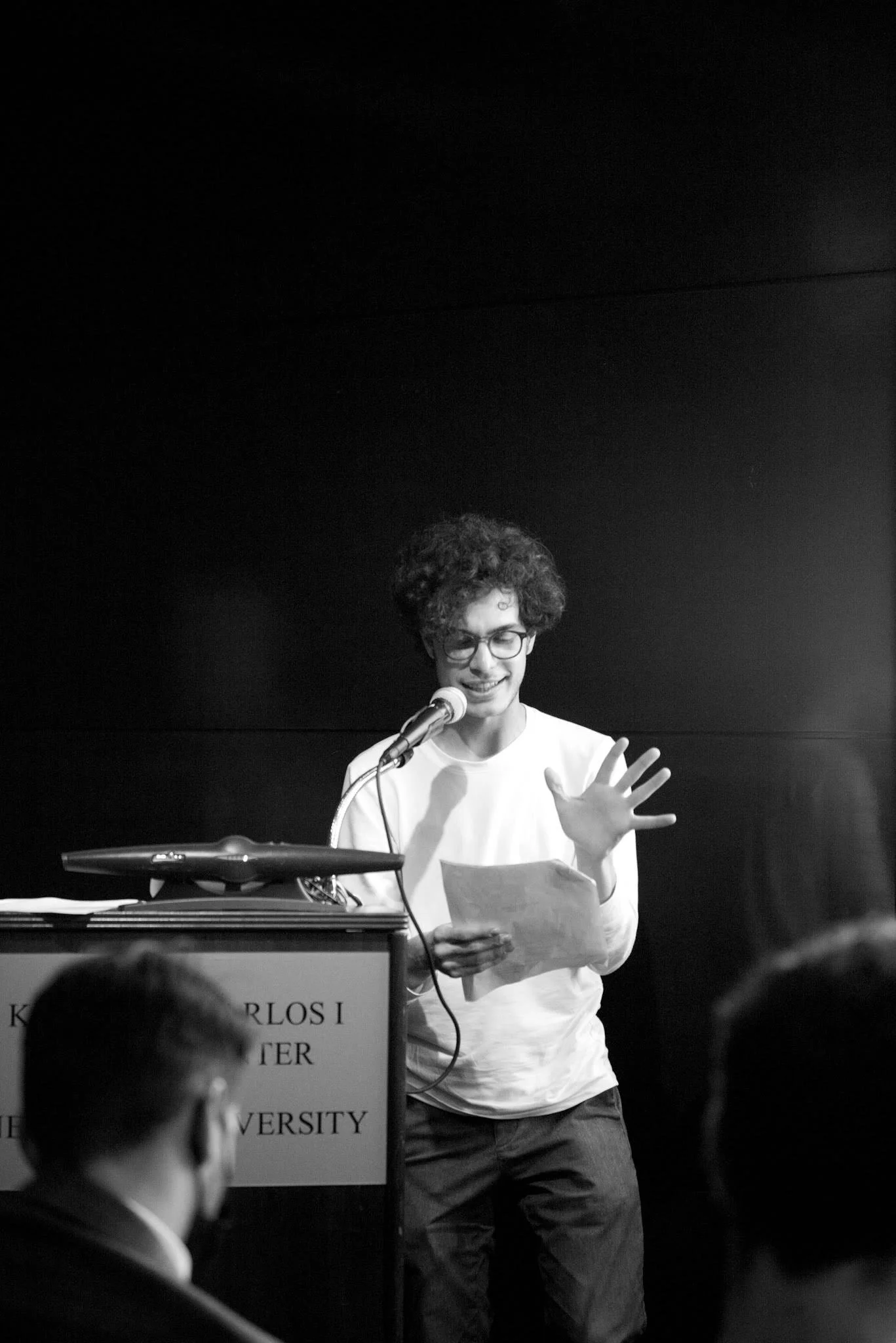
 Foto: Kine Jensen