Stans henrettelsen av poeten Peyman Farahavar
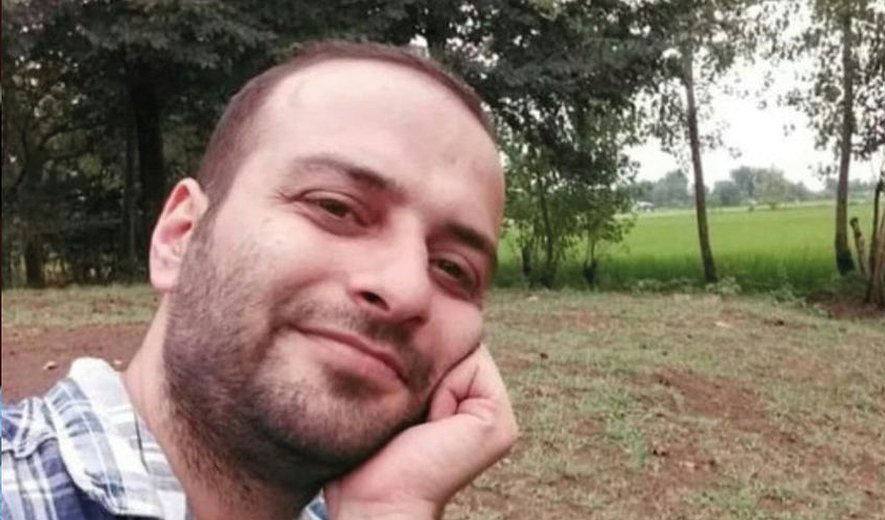
PEN America og Norsk PEN er dypt rystet og bekymret for den iranske poeten og aktivisten Peyman Farahavar, som er dømt til døden i Iran. Iranske myndigheter må umiddelbart stanse henrettelsen og løslate ham.
Farahaver har vært fengslet siden august 2024, og ble dømt til døden i mai 2025. Saken hans er nå oversendt til myndighetene som har ansvar for å fullbyrde dommen. Henrettelsen kan derfor skje når som helst.
Han har lenge vært aktiv i protester mot regjeringen gjennom sitt arbeid og engasjement som poet og aktivist. Dommene mot ham omfatter blant annet «propaganda» og «opprør».
Det er rapportert om tortur, mishandling og manglende helsehjelp i fengsel. Farahavars advokater har også uttrykt alvorlig bekymring for manglende rettssikkerhet, blant annet bruk av tilståelser fremtvunget under tortur og fravær av en rettferdig rettergang.
Les hele uttalelsen til Norsk PEN og PEN America.
Iranian Poet Peyman Farahavar at Imminent Risk of Execution, say PEN America and PEN Norway
(NEW YORK/OSLO) – PEN America and PEN Norway are deeply alarmed at the critical risk of imminent execution of Iranian poet and activist Peyman Farahavar, who was sentenced to death by Iranian authorities in May 2025. In the past week, his case was moved to the sentence enforcement branch, meaning his execution could happen very soon.
Iranian authorities must immediately halt the execution and release him.
“Peyman Farahavar’s life is in critical danger,” said Karin Deutsch Karlekar, Director of Writers at Risk at PEN America. “The Iranian government is about to murder a poet because of his writing. It is abhorrent and shows how far the government is willing to go to silence dissenting voices. He must be released.”
Farahavar, a Gilaki poet and activist, was arrested in August 2024 and is currently being held in Rasht (Lakan) Central prison. He regularly engaged politically through poetry and protests, and had been critical of the sale of farmers’ land in Gilan province to non-locals as well as of government environmental policies. He has long been active in anti-government protests – he was previously detained in May 2022 for his protest activity. Both his writing and his political activity have formed the basis of the government’s charges against him, which include “propaganda” as well as “rebellion” and moharebeh or “war against God,” charges that both potentially carry the death penalty.
Farahavar was reportedly beaten and abused while in detention, and additionally faced medical neglect. Prior to the most recent developments, Farahavar’s appeal was rejected for the sixth time, and his request for a retrial had been rejected in April. Rights monitors as well as Farahavar’s legal team have raised serious concerns about due process, his lack of access to a lawyer of his choice, evidence and confessions extracted under torture, and the lack of a fair trial and appeals process.
“Peyman is a good poet and a kind-hearted man, and he has an 11-year-old son who is waiting for his father to come home,” said poet Jamshid Azizi, who shared a cell with Farahavar for two years after also being jailed for his expression, and now has fled into exile. “He was tortured and forced to confess. No one deserves that, and especially not someone who decides to create poetry as their form of protest. As the world will now see just how dangerous it is to be a writer in Iran, I just wish I could do something to help my friend.”
Poets both inside and outside Iran are mobilizing in support of Farahavar, in an effort to save his life. A petition circulating signed by hundreds of poets and writers urges Iranian authorities to halt his execution and for the international community to intervene on his behalf.
Despite its rich literary and cultural traditions, Iran is currently one of the world’s most repressive countries for writers. PEN America’s 2025 Freedom to Write Index counted 53 jailed writers, a 23 percent increase from the year before and the highest figure since the 2022 spike seen in the wake of the Woman, Life, Freedom protest movement. Seventeen of the 53 jailed writers were women, leaving Iran still as the world’s leading jailer of women writers. Other active documented cases of persecution in the Writers at Risk Database, which also tracks legal harassment, physical attacks, displacement, exile, and other forms of persecution, rose from 127 to 156.
In the past year, Iran has seen a significant escalation of political repression. Iranian authorities carried out brutal crackdowns on dissent following nationwide protests in December 2025 against human rights abuses and economic issues in the country, accompanied by internet shutdowns that limited people’s voices from reaching the rest of the world as the country slid into war with Israel and the United States. In turn, the number of executions carried out by the regime has risen dramatically. According to Iran Human Rights, at least 121 protesters are currently sentenced to death or at risk of execution.
PEN America and PEN Norway strongly urge the Iranian authorities to halt the planned execution of poet Peyman Farahavar, and to stop jailing and threatening writers and other dissident voices because of their words and expression.